Pop over to engineeringandcareering.hashnode.dev where you can find recent posts about engineering and growth.

Stopping the conversation car crash - a guide to help big groups use Slack
Sunday 22 November 2020
Managing a big group of engineers (or yourself), in the new worlds of remote and slack can be hard. Some days are just breezy, whilst others full of struggle - helping people talk to, rather than past each other.

After spending some years on mail-groups, forums, and chat software, I wrote up these rules with the help of a few fine colleagues to help guide big groups in the use of Slack.
These are also available as in Markdown in a githib Gist.
Testing In Production and Observability
Saturday 1 February 2020

I was hit with the same challenge a few years ago, where I need to shift from an 'automate, inspect and ship' process to a continual release method that required a level of testing in Production.
Test in Production: setting expectations on your services.
Instrumenting Application Behaviours with Monitoring tooling
Adding observability and cross-application monitoring to microservices
Testing in Production is your safety net. Your monitoring should be exceptional.
A real-life tale of how Testing in Production has your back if you build safe enough failure states
Mentoring conversations
Friday 3 January 2020
At @tes_engineering mentoring is essential to how we work and grow.
Mentoring can vary a lot; often the key duties are:
Conversations are dynamic. Mentors aim to choose a good format and adapt to suit the situation and the mentee's needs. There are a couple of formats I've found really useful to lean on to get a chat going and to build shared knowledge and rapport.
We have engineering skills maps and 6 monthly reviews to help our people think how they would like to grow. Mentors then can assist in finding ways forward.
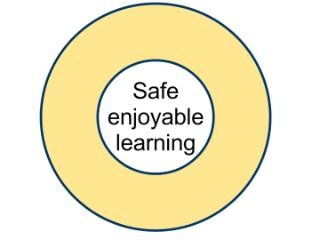
Beyond that, you, as a mentor need to build rapport and trust, so you can be told and tell critical information that might otherwise go unsaid.
Active Listening is a great way to do this, as well as a way to learn and guide without dominating a conversation.
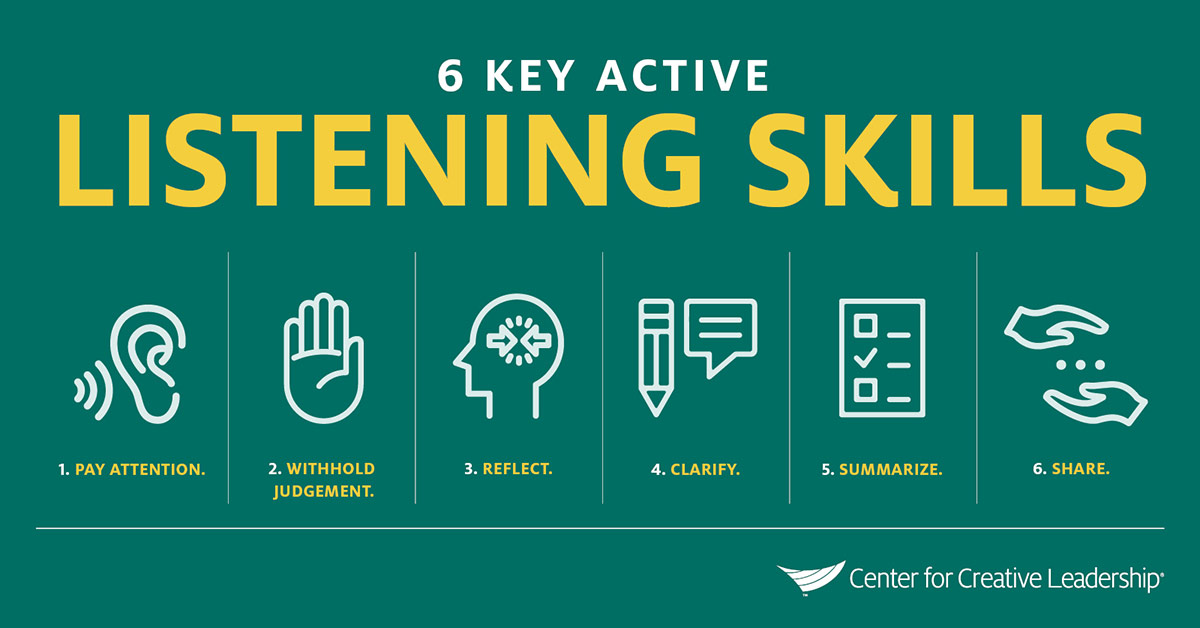
(credit to ccl.org)
There's a lot more to the power and value of mentoring, and there is a lot of depth in way you can use conversations to support guide and grow. Hopefully these patterns will get you started.
Mentoring can vary a lot; often the key duties are:
- 👂 Be a person to speak to and listen
- 👐 Offer Tes Engineering support and comfort
- 🧭 Help people navigate the organisation
- 🏋🏻♀️ Help people grow capability
- 🎆 Celebrate success!
- 📤 Share your experience
- 🏗️ See people grow and see how people grow
- 👁️ Gain insight and empathy 🗨️
Mentor chats
Mentoring revolves around having frequent chats with the person you are mentoring. It might be a free style catch up, or follow a questioning structure. Maybe the right conversation needs structure to help with growth. Without a chat there will be no mentoring - it all starts there.Conversations are dynamic. Mentors aim to choose a good format and adapt to suit the situation and the mentee's needs. There are a couple of formats I've found really useful to lean on to get a chat going and to build shared knowledge and rapport.
Catch up style
Catch ups are great to keep remote and timezone distributed people in the loop- 🎁 Share what’s going on in your world / team
- 🐢 See where the conversation takes you
- 👂 Keep listening
Ask 4 questions
The 4 questions structure is great to help someone gain a different perspective and talk things through. It's my go-to choice.- ⚕️ 1. How are you?
- 👍 2. What’s good?
- 👎 3. What’s not so good?
- 🧩 4. Is there something we have not talked about that we should?
Focus on growth and skills acquisition
Growth and skills based conversations are best when supported by goals or a direction.We have engineering skills maps and 6 monthly reviews to help our people think how they would like to grow. Mentors then can assist in finding ways forward.
- 🗺️ Look at progression and acquisition
- 🛣️ Ask them about how to progress a step
- 🚧 Discuss blockers
- 🎊 Throw in a good challenge
Why do I like these?
A key to helping someone grow at work is helping them feel safe and happy. No one learns much for long without these. Mentoring conversations should start by helping someone into this position.Beyond that, you, as a mentor need to build rapport and trust, so you can be told and tell critical information that might otherwise go unsaid.
Active Listening is a great way to do this, as well as a way to learn and guide without dominating a conversation.
(credit to ccl.org)
There's a lot more to the power and value of mentoring, and there is a lot of depth in way you can use conversations to support guide and grow. Hopefully these patterns will get you started.
Flexing to the demands of your team / Coaching for growth
Tuesday 1 January 2019
"adapt to growth" - Max Lansberg
Take time to look at how and what your team are learning. Adjust your style to support and amplify the right things.
The Coaching Spectrum
There's a spectrum of choices of how to engage in coaching conversationsThe coaching spectrum guides my choice of how to interact with someone learning. It gives a perspective on the choices to make when approaching learning with a team but also puts new demands on me to be able to adjust my style to the situation. It helps me plan how I will interact, rather than reviewing why something isn't working.

The spectrum offers of series of choices: from the formal directive manner to aiding understanding. Consider the spectrum being from a Sergeant major style orders to a more Zen approach to renewal and learning.
Being directive is solving people’s problems for them. It allows people to gain context and basic learning; for example, training and shadowing. Helping understanding might involve sharing the articulation of the goals and planning or guiding them towards selecting their own 'good enough' solution.
Mentoring exists in the middle. As a mentor, you are both bringing your understanding and some conversational skills to bear on the situation by offering advice and asking probing questions. But your skin isn't in the game, in the end, it’s for the mentee to decide.
Selecting a style
I work to choose my style to suit the situation and the person: should I tell them what to do, or let them discover for themselves. I consider what can be gained when I make my choice: time available, context, and learning potentialIn a situation that needs tight risk management or control, or working with a group of beginners, a 'Push' coach-lead style can help focus on initial learning, progression, giving structure. Whereas a skilled team will feel stifled, frustrated and need the freedom to advance and become autonomous learners.
The Pull end of the spectrum is where coaches get the most value, but you sacrifice direction and control. Peter Hill, a coaching expert who popularised the model, has this to say:
"There is no doubt that the most effective end of the spectrum to work at is the non-directive as you are working with the client’s own map and reality... However, having said that it is probably the most difficult end to work at"
Flexing to the demands of your team
Working across the spectrum requires different skills. The more instructive/directive side needs knowledge of the job or domain to guide and get trust. In the less directive 'Pull' space, you'll be asking questions of the person, so using rich reflection skills and awareness to avoid slipping into instructional ways. There is value in being able to pick the interaction style that is right for a team and its members.Being aware of your default styles and stretching your skills can help you be able to pick the right one.
I instinctively work towards the 'Pull' space, and I see a lot of value in producing not just a result, but also the ability to reproduce it. This can be my downfall as sometimes people don't have context for wide decision-making, and need a safety net and structure to aid their learning. Other times people would like me to state an opinion and get the job done. I have to assess and adjust and have come to understand that sometimes people do welcome being instructed in what they need to do, whilst they safely gain the experience and perspective that I have.
Navigating the Coaching Spectrum
I’ve found the Coaching Spectrum powerful when thinking about how I might navigate along with it as part of a learning plan.
Whilst at a client I had a requirement to work with a team and a Tech Lead for 8 weeks. My aim was to leave them a legacy of thinking and practices. I wanted to inspire them to work in new ways, not to make them reliant on a coach.

Knowing that I needed to be interacting differently at the end of my time there I built up a plan of interactions that challenged me to transition from 'Push' to Pull - transferring the leadership of the team and aiming for the team to own their own problem solving rather than just doing.
It’s often easier to direct than to wait and to question, missing the small failures that spark learning. The coaching spectrum highlights that there are critical times to be firm and direct, but for a learning team, you also need to build towards giving room to fail.
Next, I want to look at how I like to structure the building blocks of learning, and the value of pulling it into context by learning by doing.
Can you get your team from zero to hero?
It’s often easier to direct than to wait and to question, missing the small failures that spark learning. The coaching spectrum highlights that there are critical times to be firm and direct, but for a learning team, you also need to build towards giving room to fail.
Next, I want to look at how I like to structure the building blocks of learning, and the value of pulling it into context by learning by doing.
 |
| This was the fifth part of a series on Leading and Guiding Groups. |
Subscribe to:
Posts
(
Atom
)


